The words card holder and wallet are often used interchangeably, but there are distinct differences between these two everyday accessories.
A wallet is typically a flat, folded pouch with various sections that hold cash (including coins), credit cards, ID, and other small items such as stamps and passes. In contrast, a cardholder is a smaller, non-folded accessory featuring slots on either side that cards and banknotes slide into.
Although subtle, these differences can make a real impact on how you use them day to day. The right choice depends on what you carry, how often you use it and how you like things to feel in your pocket. Whether you’re buying for yourself or choosing a gift, it’s worth understanding how each option works in practice.
What is a bifold wallet?
A bifold wallet is a traditional style of wallet with a symmetrical design that folds in half. It usually includes multiple card slots, a section for banknotes and sometimes a coin pocket, offering a good amount of storage without becoming overly bulky.
Bifold wallets are one of the most common types of men’s leather wallet, thanks to their balance of practicality and familiarity. They can be crafted from various materials such as leather, fabric, or synthetic materials, to cater to diverse tastes and preferences.
Are bifold wallets good?
Bifold wallets remain popular for a reason. Their classic design offers a straightforward way to organise cards and cash, making them well suited to everyday use.
Leather bifold wallets in particular tend to hold up well over time, especially when made from high-quality materials. They fit comfortably in most pockets and come in a wide range of styles and price points, which makes them a reliable, all-round option.
Are there any downsides to a bifold wallet?
While bifold wallets are versatile, they’re not always the best fit for everyone.
If you prefer to carry very little, they can feel slightly bulky compared to a slimmer alternative like a card holder. Additionally, overstuffing a bifold wallet can lead to premature wear and tear, compromising its durability over time.
However, these situations can be easily overcome by opting for a slimline leather wallet like the Billy Tannery Bifold. It's considered layout can fit 12+ cards with a full-length pocket for banknotes and receipts. It’s made from sustainable bark-tanned goat leather that will stand up to everyday life whether it’s tossed in your festival bag for a weekend away or carried in your jacket so that you can pay for a coffee on your morning commute.

What is a card holder?
The term ‘card holder’ can refer to a person who holds a particular card (like an exclusive black card or a membership card), but in this context, it means a compact accessory designed to carry cards.
A card holder is typically slim and non-folding, with slots for credit cards, ID and business cards. Unlike traditional wallets, it usually doesn’t include space for coins and only limited room for cash.
That simplicity is what defines it — it’s designed to carry just what you need, nothing more. As with traditional wallets, card holders come in various materials, including leather, metal, and fabric, offering versatility in both style and functionality.
What are the benefits of a card holder?
Card holders are built around a more minimal way of carrying your essentials.
Their slim design makes them easy to slip into a pocket or small bag, and they naturally limit how much you carry, which many people prefer day to day. There’s also a certain ease to using them — everything is visible and accessible without needing to open or unfold anything.
Card holders also tend to have a cleaner, more understated look, appealing to those who prioritise modern design.
Are there any drawbacks to a card holder?
The simplicity of a cardholder won’t suit everyone. Like most things, it comes down to how much you carry and how you like to organise it.
If you regularly carry cash, receipts or multiple cards, the limited space can feel restrictive. Some people also prefer the structure and familiarity of a traditional wallet, especially if they’re used to having everything in one place.
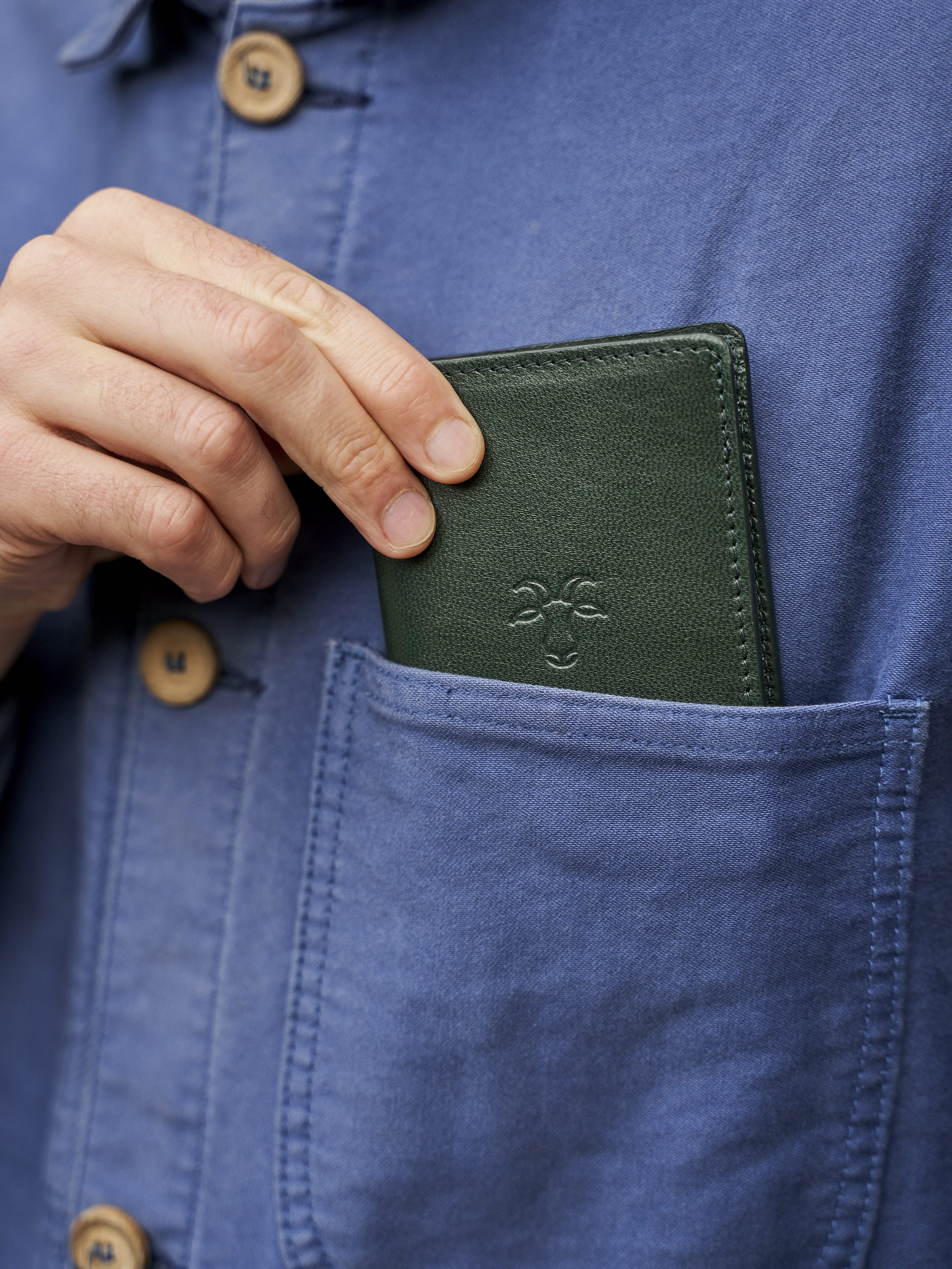
Our slim leather card holder is the best of both worlds, fitting 6 cards in total so that you can carry your essentials with you at all times. It’s even got space for a few folded banknotes just in case you need them.
Its compact design is ideal for jean pockets and handbags. Don't worry though, while highly functional, its aesthetic appeal isn’t overlooked. It comes in five timeless colours and has understated embossing on each side.

Which is better, a bifold or a trifold wallet?
The choice between a bifold and a trifold wallet comes down to capacity.
Bifold wallets offer a good balance between storage and size, which is why they’re the most common option. Trifold wallets provide more space, but they tend to be thicker and can feel bulkier in a pocket.
If you want something that stays relatively slim, a bifold is usually the better choice. If you need extra storage, a trifold may suit you better.
Is it better to have a wallet or card holder?
There isn’t a single right answer — it depends on your routine.
A wallet is better suited if you carry cash, receipts and multiple cards on a daily basis. A cardholder works well if you prefer to keep things minimal and mostly rely on cards.
It’s also worth considering how the accessory is made. Materials like full-grain leather tend to last longer and wear better over time, which makes a difference for something you use every day. If you’re comparing options, our guide to the best full-grain leather wallets goes into more detail on what to look for.

Explore leather wallets and cardholders
If you’re weighing up the difference between a card holder and a wallet, it often helps to see both side by side.
Explore our range of high quality leather wallets and range of leather accessories to find the option that best fits how you carry your essentials day to day.
Blog posts